
Summary
- Category Construction management, Design, Safety coordination
- Reference years 2024 - ongoing
- Place Capannelle, Rome (RM)
- Client Fire Department
- Type of service Final design, Executive design, Construction supervision, Safety coordination during design and execution phase
- Import works € 428.687,14
Il Progetto
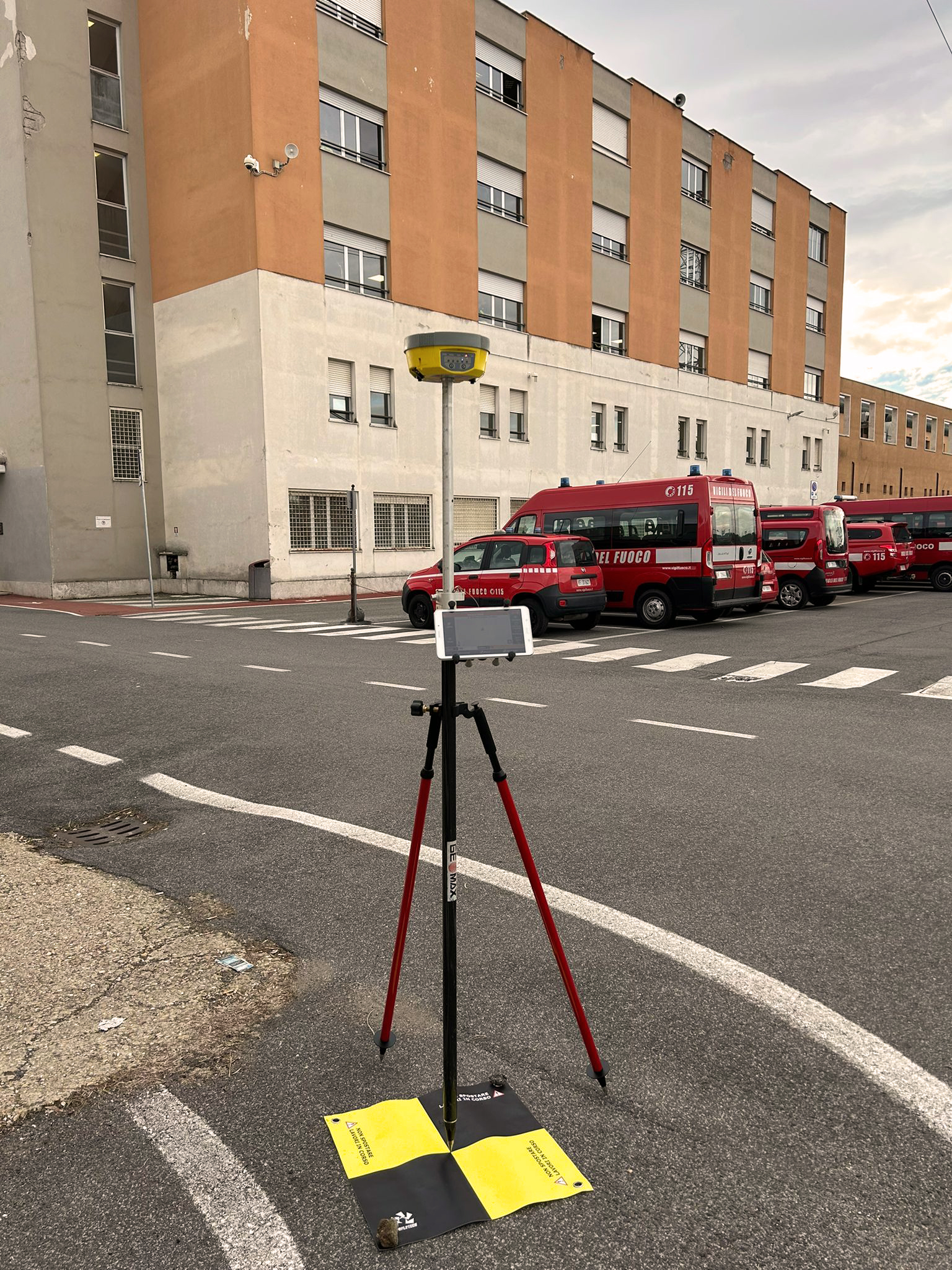
Architectural and functional recovery of the Teaching Rooms Building at the Central Fire Prevention Schools, Capannelle (Rome)
The Central Fire Schools, conceived in 1939 and built between 1940 and 1941, were designed by architects Carlo Di Maria, Claudio Longo Gerace, and Dagoberto Ortensi. The study of the design was particularly laborious and painstaking so that the various parts of the Schools complex would be harmoniously coordinated to respond precisely to the intended functions.
The Schools were envisioned as a real large military barracks, organized around large open spaces with different functions and in turn identified by large isolated building bodies.
The main purpose of this intervention is a targeted redevelopment of the building that houses the classrooms, which is grafted right onto the axis that furrows and defines the complex.
Redevelopment of the building is pursued through:
– an external upgrading of the building envelope in its essential components and finishes, currently with several critical issues;
– securing of architectural components in ca through recovery and restoration of deteriorated elements.
The purpose of the work, therefore, is to restore the building to an appropriate level of architectural quality. Specifically, this is a routine maintenance intervention aimed at the upgrading of the exterior finishes, without altering their architectural, morphological and chromatic characteristics: in fact, all the currently existing finishing materials will be maintained and even the colors will be re-proposed in their current characterization, precisely in order to ensure the mere upgrading of the facades that currently present various phenomena of degradation and deterioration.
The subject building consists of five floors above ground, with a total height of about 18 meters, rising to 20.70 in the case of the two volumes identifying the stairwells. The elevations emphasize the regular and austere character of the general layout of the entire Schools complex. They are finished in plaster, painted white, gray and terracotta-colored, with some travertine details.
In order to optimize the intervention, the project under consideration proposes a system of integrated interventions that solves the critical issues detected and intervenes substantially on the entire external architectural envelope. Therefore, it is proposed to proceed with general maintenance interventions that will affect certain portions of the school complex through repairs, renovation and replacement of the building’s finishes.